Add Row
Add Element
cropper
update
Growing Secure
update
Add Element
  • Home
  • Categories
    • Market Trends & News
    • Mortgage News
    • Local News
    • Ohio News
    • Personal Finance
    • Featured
    • Real Estate News
    • Safety & Budget
    • National News
  • Featured Business
May 08.2025
3 Minutes Read

How America’s First Pope Influences the Future of Catholicism

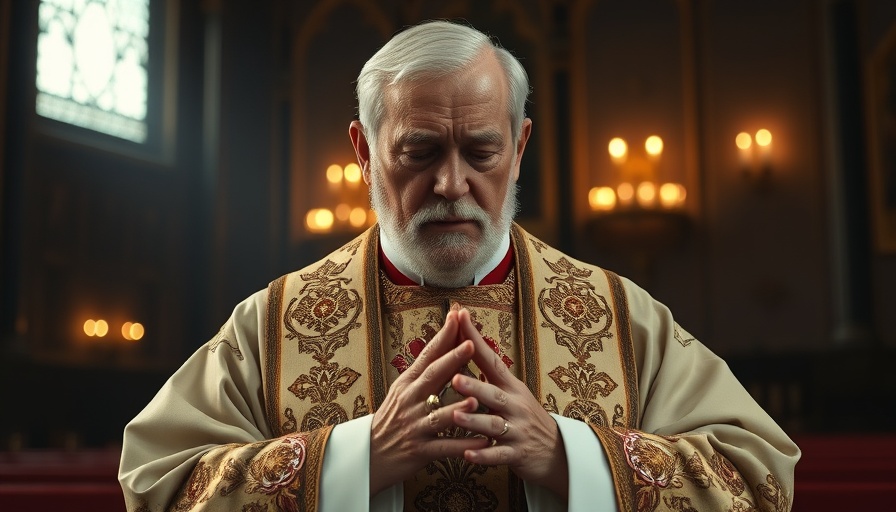
Elderly clergyman praying in ornate robes, dim interior, photorealistic.

The Unparalleled Rise of America’s First Pope

With the ascension of Pope Francis, the implications for the Catholic Church resonate far beyond Vatican walls. As America’s first pope, his leadership reflects a unique bridge between traditional church values and the contemporary societal challenges faced by many believers today. He embodies a new era for the Church, one that's drawing attention to social justice, inclusivity, and global outreach.

Historical Context: The Significance of Pope Francis

Pope Francis, born Jorge Mario Bergoglio in Buenos Aires, Argentina, has always carried a unique perspective on faith and leadership. His prominence as a progressive voice within the Church has led to discussions that were once deemed too controversial for papal discourse. This is particularly significant for American Catholics, who find themselves at a crossroads in both faith and social issues. His papacy has reframed many discussions around important topics—climate change, global poverty, and immigration policy, all resonating with an increasingly diverse Catholic community.

Social Connection: Why This Matters Today

In the face of rapid social changes, Pope Francis' emphasis on compassion and understanding appeals to a younger demographic that often feels alienated by traditional doctrines. His approach encourages dialogue and inclusivity, particularly important for younger U.S. Catholics who seek a church that aligns with their values and experiences. With 23% of U.S. adults being former Catholics, his role becomes critical in addressing discontent and re-engaging those who have drifted away.

Future Perspectives: How Will Pope Francis Shape the Catholic Church?

The future of the Catholic Church under Pope Francis is ripe with potential. As he emphasizes a pastoral approach, there’s a predicted shift towards a more decentralized church structure that empowers local bishops and communities. This could lead to a more adaptable and responsive institution, one that can effectively address local concerns while promoting its global mission. His leadership raises essential questions: How will the Church tackle pressing issues like LGBTQ+ inclusion or the role of women?

Unique Benefits of Understanding This Transition

For Catholics and non-Catholics alike, understanding Pope Francis' influence is crucial in grasping the evolving landscape of religious leadership. His focus on mercy and economic justice resonates with many everyday struggles, addressing how faith intersects with personal well-being. Furthermore, his vision for a 'poor church for the poor' presents a revitalized approach that aligns with broader humanitarian movements.

Decisions to Make: Reflecting on Personal Values

With Pope Francis at the helm, individuals may find themselves reflecting on their personal values and the community they've chosen to be a part of. As the Church increasingly focuses on social issues, members are prompted to consider active engagement in advocacy, charity, and community service. This is a reminder that faith can be a profound driver for social good.

Conclusion: Embracing Change Together

The conclusion is clear: Pope Francis' papacy serves as a catalyst for change within the Catholic Church and beyond. Women and minority voices are being amplified, painting a hopeful imagery of a Church willing to evolve alongside society. As we navigate these changes together, we must embrace the future with hope and an open heart.

Market Trends & News

1 Views

0 Comments

Write A Comment

*
*
Related Posts All Posts
12.15.2025

The EU-Mercosur Trade Deal: Balancing Economic Growth and Environmental Stability

Update Understanding the EU-Mercosur Trade Deal: A Historic Partnership on the Brink For over two decades, the European Union and the Mercosur countries—Argentina, Brazil, Paraguay, and Uruguay—have been negotiating a significant free trade agreement. The stakes are high, and the future of this agreement remains in jeopardy as new political winds sweep through South America and growing environmental concerns loom large. But what does this deal mean for both regions and the global order? Historical Context: Two Decades in the Making The journey toward an EU-Mercosur trade agreement began in 1999, making it one of the longest running trade negotiations in history. Despite numerous hurdles, including opposition from farmers fearing competition and environmental advocates concerned about deforestation, leaders from both sides are finally speaking of renewed efforts to conclude a deal. The promise of increased access to South American markets for European goods, as well as agricultural products from Mercosur entering the European market, holds tantalizing potential for economic growth. Social Implications: Bridging Two Regions The implications of a successful trade deal go beyond commerce; they represent a strategic alignment between Europe and Latin America. Should the agreement be ratified, it could strengthen political ties and enhance cooperation on global issues such as climate change and trade after the increasing influence of China in the region. The Mercosur bloc aims to establish itself as a critical player in global geopolitics, and the EU-Mercosur agreement could facilitate this ambition. Environmental Intricacies: A Double-Edged Sword Yet, the deal is fraught with environmental challenges. Critics highlight that increased trade in beef, soy, and other commodities could lead to accelerated deforestation in both the Amazon and the Gran Chaco regions—one of the world’s most biodiverse ecosystems. The EU has made pledges to uphold climate commitments, but environmental organizations argue that these guarantees are ambiguous and insufficient to prevent ecological degradation, with the potential for serious long-term consequences. Counterarguments: Weighing the Risks Against the Rewards While proponents argue about the economic benefits that could arise from this trade agreement, opponents are concerned about the significant environmental toll it may exact. Human rights organizations also express alarm, as the agreement does little to protect Indigenous communities, who may face displacement and land grabbing as agricultural demand rises. Future Predictions: What’s Next for EU-Mercosur? The future of the EU-Mercosur trade deal is uncertain. As political dynamics shift in both Europe and Latin America, the agreement may either gain traction or stall. Should it succeed, it could transform trade relations between the regions and help the EU reclaim its influence in Latin America, countering China’s growing presence. Alternatively, if opposition prevails, it may further isolate Mercosur and push it toward more advantageous bilateral agreements with non-EU partners. Conclusions and Actions: Making an Informed Choice The EU-Mercosur trade deal stands at a crucial crossroads. While the potential economic benefits can be enticing, the environmental and social costs demand careful consideration. As citizens and consumers, understanding this dynamic can help individuals make informed choices about supporting sustainable practices and advocating for trade agreements that genuinely honor ecological and human rights. In a world where trade agreements shape economies and political relationships, being informed is your first step. Engaging in discussions surrounding these issues can promote greater awareness and encourage policy changes that reflect the common good.

12.15.2025

How Retirement Hobbies Can Generate Income and Fulfillment

Update Transforming Passion into Profit: A Viable Retirement Strategy As retirement looms on the horizon, the question often arises: how can one maintain financial security while pursuing passions? In fact, hobbies don’t just fill time; they can also create additional income streams, allowing retirees to add structure to their days while padding their nest egg. The undeniable truth is that modern retirees possess a treasure trove of skills and experiences that can be monetized through various avenues. Financial Freedom Through Hobbies Recent studies reveal that many retirees are embarking on side gigs that not only enhance their quality of life but also bolster their finances. A survey from Vistaprint noted that 55% of respondents ponder the possibility of converting their hobbies into a supplemental income source. Activities ranging from selling crafts to consulting can foster this trend, offering financial benefits alongside the emotional boosts of engagement and creativity. Income-Generating Hobbies to Explore Directly from the perspectives gathered by Money and other financial outlets, several lucrative hobbies surfaced, transforming leisurely activities into cash-generating ventures: Selling Your Crafts: Platforms like Etsy offer retirees the chance to showcase handmade goods, from knitting to woodworking. Local craft fairs also provide a direct avenue for sales, fostering community interaction along with revenue. Consultancy and Tutoring: Retirees often possess industry insight that can become invaluable to others. Offering tutoring in specialized academic subjects, career coaching, or consulting can yield significant hourly rates based on expertise. Pet and Housesitting: This option provides not only extra cash but also companionship, while requiring minimal engagement from the retiree. With many families taking vacations, this can be particularly lucrative. Tour Guiding for Locals: Knowledge of a local area can translate into income through tour guiding, allowing retirees the bonus of exercising and engaging with others. Breaking Barriers: Embracing Digital Tools Technology plays a pivotal role in enabling retirees to monetize their hobbies. As observed in various surveys, the most successful side hustles are easily managed via online platforms—like consulting on Zoom or selling photography on stock sites, such as Shutterstock. This shift represents just one segment of the gig economy where senior citizens are thriving. Current financial tools also help seniors manage expenses associated with their new ventures. Future Predictions: A Thriving Gig Economy for Seniors With the trend of retirees turning hobbies into income anticipated to grow, experts highlight key components of success: adaptability, commitment, and leveraging existing skills. As the gig economy matures, the scope for retirees to innovate new, profitable endeavors will broaden greatly. Not only can these hobbies provide financial gain, but they also pose an opportunity to engage with the community, reshape identities post-retirement, and combat loneliness—factors crucial for mental well-being. Taking That First Step: Actionable Insights For retirees ready to transition from hobbies to income, consider these actionable steps: Identify your superpowers – understanding personal strengths can guide decisions about which hobbies can be monetized. Research platforms suited for showcasing your skills – various online tools can streamline the process of creating a side income. Establish clear financial goals, making sure to keep expenditures minimal and manageable. Gradually scale your efforts; there's no need to overcommit initially. Engage with community groups dedicated to similar hobbies for support and networking. The Emotional and Psychological Returns of Monetizing Hobbies Beyond the financial implications, retirees often find that engaging in meaningful work keeps their minds sharp and spirits high. The act of creating—whether through crafts, teaching, or guiding—offers intrinsic rewards that can greatly enhance one’s quality of life. Senior side gig ventures meld enjoyment with purpose, a blend essential for longevity and fulfillment. Conclusion: Begin Your Journey Today As you contemplate the horizon of retirement, envision turning cherished hobbies into rewarding income streams. The combination of passion and profitability may just become your new foundational pillar. Take that first step, identify a hobby you love, and begin exploring ways to monetize it today. The routes are ripe with possibility, waiting for those daring enough to engage with both their passions and profits.

12.14.2025

Why Ukraine's Dropping NATO Membership Demands Could Change Everything

Update Ukraine's Historic Shift: What's Behind Dropping NATO Membership Demands? In a surprising move amid ongoing war tensions, Ukraine has offered to drop its longstanding demands for NATO membership. This shift is seen as a strategic maneuver by President Volodymyr Zelensky, aiming to foster a tighter relationship with NATO—the North Atlantic Treaty Organization—while navigating the complexities of a war-torn reality. As geopolitical tensions with Russia escalate, understanding the implications of Ukraine's pivot away from NATO aspirations is crucial. The Timeline of Ukraine's NATO Aspirations Ukraine has been on a long path towards NATO membership, which commenced after the dissolution of the Soviet Union. The Budapest Memorandum of 1994 aimed to provide security assurances to Ukraine in exchange for relinquishing nuclear weapons, a commitment that underscores the depth of Ukraine's ties with Western powers. Following the Russian annexation of Crimea in 2014, Ukraine intensified its efforts to meet NATO standards, culminating in a membership application submitted on September 30, 2022. The recent summit in Vilnius revealed not only Ukraine's ongoing commitment to NATO alignment but also the hesitance of NATO members to offer a specific timeline for accession. The Weighing of Risks: Membership vs. War One significant reason for Ukraine's offer to relax demands stems from the precarious balance NATO must maintain. Amidst war, allowing Ukraine to join NATO could compel the alliance to engage directly with Russia, activating Article 5 of the NATO treaty, which calls for collective defense. Countries like the U.S. and Germany have been cautious, stating that no nation can join a defensive pact during active conflict. In this light, Ukraine appears to acknowledge that easing membership demands may enable stronger military partnerships without risking a direct confrontation with Russia. Ukraine-NATO Relations: A Stronger Council Ahead? Despite dropping immediate membership demands, the establishment of a NATO-Ukraine Council signifies a growing relationship destined to enhance Ukraine's military capabilities. As stated by Ukrainian Foreign Minister Dmytro Kuleba, the country is evolving into a 'de facto NATO army.' Although formal membership may be on hold, NATO's support—as seen in arms, training, and strategic guidance—will be crucial as Ukraine navigates the remaining challenges of the war. Long-term Predictions: A New NATO Dynamic? The implications of Ukraine’s offer extend beyond immediate geopolitical concerns. By potentially formalizing its security posture with NATO, Ukraine can ensure that it continues to receive the necessary support for defense modernization and institutional reform—even without the formal structure of membership. Furthermore, NATO’s decision-process encapsulates a progressive attitude toward evolving security challenges; instead of rigid pathways, it develops adaptable measures in response to battlefield realities. Lessons from Alternative Models: The Israel Connection If NATO cannot agree on expedited membership, the possibility of an “Israel Model” presents an alternative framework. This partnership would emphasize military collaboration and support without formal treaty obligations, prioritizing practical assistance for Ukraine. This model’s implications suggest that direct military partnerships could provide meaningful security guarantees, allowing Ukraine room to maneuver diplomatically while enhancing its defensive posture. Conclusion: The Strategic Importance of Focused Alliances In this climate of uncertainty, Ukraine's willingness to soften its demands on NATO membership could be optimistically viewed as a vital step towards immediate security needs while retaining the prospect for future integration into the alliance. As geopolitical dynamics shift, the interplay between military alliances and requirements for membership must adapt to pressing realities, positioning Ukraine to emerge robust from today's challenges. For readers seeking to further understand these developments and their implications, engaging with the ongoing political discourse is essential as it shapes the future landscape of European security.

Terms of Service

Privacy Policy

Core Modal Title

Sorry, no results found

You Might Find These Articles Interesting

T
Please Check Your Email
We Will Be Following Up Shortly
*
*
*